
Apply a Voicemod voice to an audio file
Route a recording through Voicemeeter Banana, then record the processed result.
Voicemod normally processes a live microphone. To apply a voice effect to an existing recording, you can play the file in Voicemeeter Banana and use one of its virtual outputs as Voicemod's input. This setup is for Windows.
Before you start
Install Voicemod and Voicemeeter Banana, connect headphones, and have the audio file ready. Keep both apps open while routing and recording. The screenshots below show an older interface, so some labels may differ.
Route the file into Voicemod
- Load the file in Voicemeeter. Open Voicemeeter Banana's cassette or recorder, load your audio file, and leave playback paused for now.
- Send the cassette to B1. In the cassette's bus settings, enable B1. B1 feeds the Windows recording device named Voicemeeter Output. Turn off other bus routes for this cassette unless you need them.
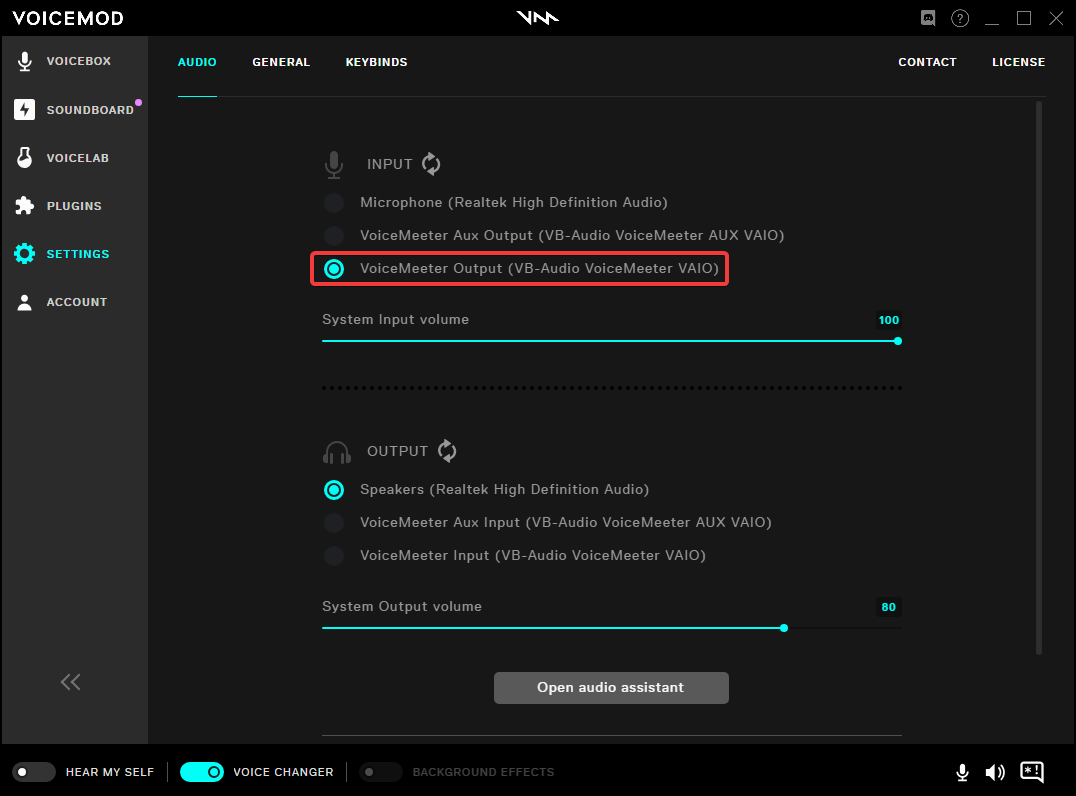
- Choose Voicemeeter in Voicemod. In Voicemod → Settings → Audio, set the input device to Voicemeeter Output. Select a voice and turn on Voice Changer.
- Play and test. Start cassette playback. The Voicemod input meter should respond, and the Voicemod virtual microphone should carry the modified audio.
Which Voicemeeter output should you select?
B1 → Voicemeeter Output. B2 → Voicemeeter AUX Output. If you use B2 instead of B1 for the source, select Voicemeeter AUX Output as Voicemod's input. Keep the selected bus and input device matched.
Listen to the modified audio
For a quick check, select your headphones as Voicemod's output and turn on Hear Myself. If you prefer monitoring through Voicemeeter, turn Hear Myself off, set A1 to your headphones, add the Voicemod virtual microphone as a Voicemeeter hardware input, and send that input to A1 only. Keep B1 off on the processed audio strip, or you can send the output back into Voicemod and create a feedback loop.
Save the processed file
Playback through Voicemod does not create a new file by itself. In a recording app such as Audacity, select the Voicemod virtual microphone as the recording input, start recording, play the file through Voicemeeter, then stop and export the result. See How to record your own voice and effects for recording guidance.
Reference screenshots and video
Windows audio settings
Voicemod audio settings
Voicemeeter routing
You can also watch the Voicemeeter and Voicemod video tutorial.
If you hear silence or feedback
- No input in Voicemod: Check that the cassette is playing, its B1 route is on, and Voicemod's input is Voicemeeter Output.
- Recording is silent: In your recording app, select the Voicemod virtual microphone rather than your physical microphone or Voicemeeter Output.
- Echo or feedback: Check that the processed Voicemod audio is not being sent back to the same B bus used as Voicemod's input. Use headphones while testing.
Still need help?
Let’s take a closer look
Tell us which step fails, your Voicemod and Voicemeeter versions, and the input device selected in Voicemod. Include screenshots of your Voicemeeter bus routing and Voicemod audio settings.